FE Curriculum Framework
The FE Curriculum Framework is a key element of the FE Fit for the Future Programme. It will support a more coordinated and consistent approach to curriculum planning and delivery across Northern Ireland's Further Education sector, ensuring provision responds effectively to learner aspirations, employer demand and labour market need.

The Framework will provide a practical blueprint for how Further Education curriculum is planned, organised and delivered across Northern Ireland. It will explain what learners can access, what they should gain, how they progress, and how colleges determine their provision.
The Framework is being developed to support a modern, flexible and responsive Further Education sector that can meet the evolving opportunities and challenges of the coming decade. It will support the sector's role in promoting economic growth, social inclusion and widening participation in learning.
Further Education colleges play a vital role within their communities by providing opportunities for people of all ages and backgrounds to gain new skills, improve employment prospects and progress in their careers. The Framework will help to support continued access to learning opportunities, so they remain accessible, relevant and aligned with the needs of learners, employers and the wider economy.
Why is the Framework Important?
FE colleges currently offer a diverse range of learning opportunities, from Entry Level (Level 0) through to Degree-Level study (Level 7). Colleges also have a dual role. They support economic growth by developing the skills employers need, while promoting social inclusion by providing accessible opportunities for those who may face barriers to education, training or employment.
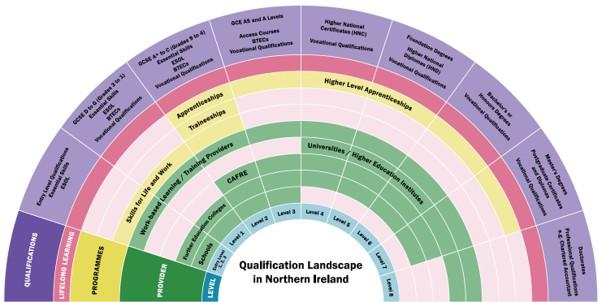
Source: A Guide to Career Entry Routes
By clearly setting out where a particular qualification or programme of study can lead to, the Curriculum Framework will help students make well informed decisions about their studies.
Labour market evidence indicates an increasing demand for higher-level skills, particularly at Level 3 and above. The Framework will support colleges in responding to this demand by strengthening progression opportunities and targeting provision where it can deliver the greatest impact.
The Framework will also build on established partnerships with employers, communities and other stakeholders to ensure that provision remains relevant and responsive to real-world needs.
Curriculum Framework Advisory Group
A Curriculum Framework Advisory Group (CFAG) has been established to oversee development of the Framework and provide strategic advice and challenge throughout the process.
The Group includes representatives from education, industry, training, voluntary and community sectors and will support the development of a robust, future-focused Framework covering curriculum provision across Levels 0-1, 2, 3, 4-5 and 6.
The Group will help ensure the Framework provides clear and accessible learning and career pathways, while responding to emerging challenges and opportunities, including technological change and advances in artificial intelligence.
Curriculum Framework Advisory Group Terms of Reference
The CFAG provides advice, guidance and direction with a view to ensuring the overall Framework provides clear and navigable career and learning pathways for learners.
Skills Barometer
The Framework will be informed by evidence from the Skills Barometer and wider labour market intelligence to ensure provision reflects current and future skills needs.
Further Education has a central role in addressing skills shortages and supporting economic growth. Strong partnerships with employers, Invest NI and other stakeholders will help ensure curriculum provision remains relevant, responsive and aligned with workforce demand.
More information on the findings of the NI Skills barometer can be found at NI Skills Barometer 2023-2033