Real Life Stories on Green Skills
The stories below share real experiences from local people who are moving into green careers. Some are just getting started, while others are changing direction and trying something new.
Someone starting out
School leavers and first steps into green careers
Eva’s story
Pathway into a Green Skills career: Level 3 qualification at South Eastern Regional College, currently studying National Extended Diploma in Construction
What does the course involve?
The Level 3 National Extended Diploma in Construction is a two-year course equivalent to three A Levels. It is designed to prepare students for careers in the construction and built environment sector or to go on to university.
The course combines theory, practical work, and real-world industry experience. You learn primary construction principles such as design, technology, health and safety, surveying, project management, and building regulations. Students also use software including AutoCAD and Revit. This gives you the digital skills employers and universities look for.
Learning is delivered by lecturers and who are experienced and includes a mix of coursework, industry-based projects, site visits, guest speakers, presentations, and reports. This helps students understand how construction works in real life, not just in the classroom.
What is the most enjoyable part of the course?
The most enjoyable part of the course is CAD work, hand drawing, and site visits. Using design software and creating drawings is especially fun and rewarding, particularly for students interested in architecture and design.
Site visits are another highlight because they allow you to see projects in real life and understand how what you learn in class is applied on site. The course covers a wide range of topics, which keeps it interesting and gives you exposure to many different construction careers, helping you discover what area suits you best.
What are your next steps?
The course opens you up to many progression routes. After completing it, students can move on to university courses such as Architecture, Civil Engineering, Quantity Surveying, Architectural Technology, or Building Surveying.
Alternatively, it provides a strong foundation for apprenticeships or employment within the construction industry. The skills, software experience, and industry knowledge gained on the course make students well prepared for the next stage of their career.
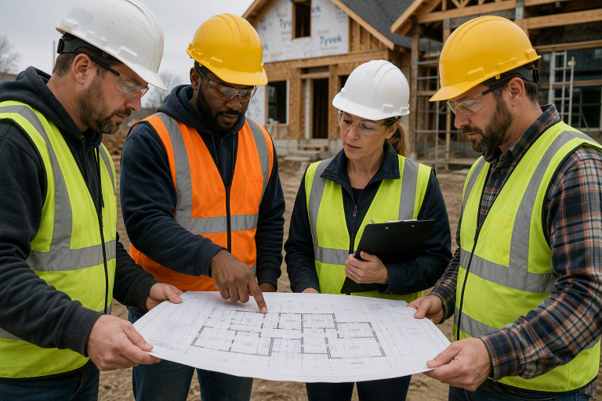
Someone training as an apprentice
People gaining experience while learning and developing their skills
Katie’s story
Pathway into a Green Skills career: Level 3 qualification at South West College, currently a Higher Level Apprentice with NI Water (Waste Management)
Please tell us a bit about your current course
I am currently studying a Level 5 Foundation Degree in Civil Engineering as a Higher Level Apprentice at South West College, Omagh. Before starting my Foundation Degree, I studied a Level 3 BTEC Extended Diploma in Construction and the Built Environment at SWC.
Is there anything that you find particularly beneficial about the course?
I enjoy getting hands on experience and gaining transferable skills that help with my day to day working tasks and college studies. Working at Northern Ireland Water allows me to work on projects that make a true difference to my own as well as the wider community. Being a HLA has allowed me to see large feats of civil engineering on the ground in the earliest stages of my career and being on the ground gaining experience whilst delivering what matters.
Do you plan on continuing your studies after completing this course?
Yes, after I complete my Foundation Degree in Engineering, I hope to continue my studies with the aim to complete both a Bachelors and Master of Engineering.
What are your goals for the future?
One of my main goals in the future is to become a Chartered Civil Engineer with the Institute of Civil Engineers. I'm currently working towards my Engineering Technician Accreditation with this goal in mind.
What is your proudest achievement to date?
I was given the opportunity to speak at an Apprentice Conference with the ICE. I attended the Institute of Civil Engineer’s Headquarters in London and spoke about the Higher Level Apprentice route, representing Northern Ireland. Alongside this, I was also a recipient of the Institute of Civil Engineer’s ICE Quest Scholarship this year!
What advice would you give to someone thinking about this as a career choice?
Gain as much experience as you can! Ask companies for a few days work experience, attend careers fairs or seminars, create a LinkedIn- all of these will open the door of opportunity. Getting out and about on site helps with deciding the best career path for you. Also, a bit of a cliché but ask questions. There is no such thing as a silly question, only silly answers!
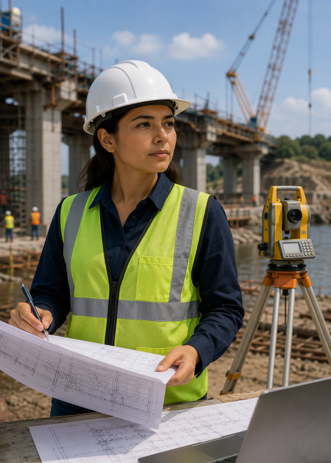
Someone changing careers
People who changed direction and found green work
Current Role
I work as a Renewables Project Director in ESB G&T in Ireland, responsible for managing windfarm development projects and managing forestry projects in Ireland.
What led you to consider a Green Skills career?
I wanted a job in the Renewables Generation sector because I believed the work could be interesting, reasonably well-paid and worthwhile.
What was the pathway into your career?
I got a degree in electrical/electronic engineering in Queens University, Belfast and later got a Renewable Energy Diploma from the Open University.
I worked in jobs that gave me relevant experience, including electrical design work for protection equipment in stations; teaching English in Japan; managing windfarm construction for Vestas in Ireland & UK. Based on this education and work experience, I was able to interview successfully for a project director role managing windfarm construction projects for ESB.
What is the biggest misconception you have encountered about Green Skills careers?
There is a myth that you need an engineering degree to get involved in Green Skills careers. While there are many roles for engineers, most renewable engineering projects require input from multidisciplinary specialists. Therefore, there are opportunities for many people to pursue a green skills career.
Do you have any advice for people considering a Green skills career?
Use multiple approaches to find work - including making speculative applications, attending conferences, using recruitment consultants, changing jobs to build up work experience relevant to getting the job you want and getting relevant education. Don’t give up too soon.
Read about Sinead who changed direction from working as a classroom assistant to becoming an electrical apprentice.